Donate

Search Website

SPECIAL CONSULTATIVE STATUS

In 2016, Al-Ayn Social Care Foundation (Iraq) received special consultative status with the United Nations. This is a special status conferred upon NGOs with particular competence in fields of activity covered by the United Nations Economic and Social Council (ECOSOC). ECOSOC’s mandate covers three dimensions of sustainable development – economic, social and environmental. Obtaining special consultative status recognizes the contribution of Al-Ayn Social Care Foundation (Iraq) to these important areas of work.

As a result of obtaining this status, Al-Ayn Social Care Foundation (Iraq) is able to participate in various United Nations conferences and events.

AL-AYN SOCIAL CARE FOUNDATION PARTICIPATION AT THE UN

Since we obtained special consultative status in 2016, we have participated in various forums at the United Nations. In Geneva, we have engaged on numerous occasions with the Human Rights Council. In New York, we have participated at the High-Level Segment as part of the High-Level Political Forum on Sustainable Development, the Commission on Social Development and the Commission on the Status of Women.

The UN Human Rights Council

The UN Human Rights Council is an intergovernmental body with the United Nations system made up of 47 States responsible for the promotion and protection of all human rights around the globe. It has the ability to discuss all thematic human rights issues and situations that require its attention throughout the year. It meets for three regular ‘Sessions’ annually, in February/March, June/July and September/October. As an NGO with special consultative status, Al-Ayn Social Care Foundation (Iraq) has the opportunity to attend these Sessions and is permitted to submit written statements to the Council, make oral interventions and/or organize parallel events, known as ‘side events’ on issues relevant to the work of the Human Rights Council.

As of April 2026, we have submitted 8 written statements to the Human Rights Council, made 10 oral interventions and hosted 1 side event in 2020 with the title “Empowering Children Under the Threat of Violence”.

Through our written statements, oral interventions and side-event, we have shared with the international community the plight of two neglected groups in society, orphaned children and widowed mothers. Our special consultative status has provided us with a platform to raise awareness about the challenges they face, and the work we as an organisation are doing to support them.

For example, during our side event in 2020, which was attended by other NGOs and diplomats, we presented the history of Al-Ayn Social Care Foundation, explaining that it was created to document those who had been killed as a result of terrorist activity or other human rights violations following the 2003 conflict in Iraq, and to care for the families left behind. We gave an overview of our services, showcased case studies of orphaned youth we have been able to support and laid out our plans for ‘Hikayati’, our purpose-built child-centred project in Najaf,

Through our numerous statements, we have written and spoken about our education and training programmes, including our lifelong learning initiatives via our ‘Luminous Stars’ vocational training centres. Our interventions have also included information regarding our holistic approach to health and well-being, highlighting our psychological rehabilitation projects as well as our provision of basic medical care. During the Coronavirus pandemic, we shared with the Human Rights Council the emergency work we were doing both to minimise the risk of spreading the virus, and to continue to support our beneficiaries who, as vulnerable members of society, were particularly at risk.

As our operations have expanded from Iraq into Ghana and Afghanistan, we have shared these important developments with the international community through the Human Rights Council.

Our interventions and statements have always emphasized that the work we do is aligned with the UN Convention on the Rights of the Child and our commitment to achieving the UN’s Sustainable Development Goals (SDGs).

The High-Level Segment

The High-level Political Forum on Sustainable Development (HLPF) is the central United Nations platform for the follow-up and review of the 2030 Agenda for Sustainable Development and its 17 Sustainable Development Goals (SDGs).

The Forum is convened annually under the auspices of the Economic and Social Council (ECOSOC) for eight days and includes a three-day ministerial segment, known as the High-Level Segment. The Forum conducts regular in-depth reviews of progress on the Sustainable Development Goals and includes Voluntary National Reviews where countries present the findings from national reviews of progress with a view to accelerate the implementation of the 2030 Agenda.

The HLPF brings together ministerial and high-level representatives of governments, as well as a wide range of expertise and stakeholders, including heads of UN entities, academics and other experts, and representatives of major groups and other stakeholders. The Forum, under the auspices of ECOSOC, and the ECOSOC High-level Segment adopt a negotiated ministerial declaration.

As part of the High-Level Segment, NGOs with consultative status are given the opportunity to address ECOSOC through written statements. This represents an opportunity to contribute to important issues concerning the 2030 Agenda for Sustainable Development.

As of April 2026, we have submitted 4 written statements at the High-Level Segment. In our statements, we have shown how our projects contribute towards the achievement of various Sustainable Development Goals (SDGs). For example, we have highlighted that all our work is geared towards achieving SDG 1, no poverty. Beyond that, we have contributed to SDG 2, zero hunger, through emergency relief packages, seasonal food parcels and food distribution campaigns. SDG 4 regarding inclusive and equitable education has been a key part of our objectives through projects such as ‘Hikayati’, ‘Luminous Stars’ and our contributions to the cost of tuition for orphaned youth. Through our written statements we have demonstrated the range and depth of our efforts in striving towards attainment of numerous other SDGs too.

We submitted a written statement for CSocD’s 63rd Session in February 2025. The statement sets out how our ‘Luminous Stars’ centres are aimed at reducing poverty, in line with SDG 1 and also aimed at achieving full and productive employment for all, in line with SDG 8. We have also raised awareness around ‘Hikayati’ and the ways in which it is contributing to SDG 4 on equitable and inclusive education, as well as SDG 3, on healthy lives and well-being for all ages. In addition, our written statement included information about our work in Ghana, in particular acquiring legal documentation for our beneficiaries so they can participate in government programmes and secure formal employment. Regarding Afghanistan, we included information about the launch of our Private Sponsorship programme to allow individuals to sponsor Afghan children.

Al-Ayn Social Care Foundation representatives also attended CSoCD’s 64th Session in person in February 2026, to continue to advocate for the rights of orphaned youth and widowed mothers, and raise awareness of the important work our organisation is doing to support them.
The Commission for Social Development

The United Nations Commission for Social Development (CSocD) is a Commission within the United Nations Economic and Social Council (ECOSOC). Its main responsibility is to provide advice to the UN on social development issues. The Commission plays a vital role in promoting social policies that support the overall development goals of the UN, particularly in relation to eradicating poverty, advancing social integration, and ensuring full employment and decent work for everyone.

The CSocD meets annually at the UN headquarters in New York, usually in February. Each year, it has a priority theme and an emerging issue to guide its work and discussions.

NGOs with consultative status with ECOSOC, such as Al-Ayn Social Care Foundation (Iraq) are permitted to attend the annual meeting, known as a ‘Session’. NGOs can also submit written statements to the Commission, and a limited number are given permission to give an oral statement.

In February 2023, representatives from our New York office attended CSocD’s 61st Session to understand more about the operation and objectives of the Commission. Based on their findings, we committed to engaging at CSocD in the future depending on the relevance of the Session’s priority theme and emerging issue to our organisation.

The Commission on the Status of Women

The Commission on the Status of Women (CSW) is the principal global intergovernmental body exclusively dedicated to the promotion of gender equality, the rights and the empowerment of women. It is a Commission created under the auspices of ECOSOC and meets annually for a two-week session in New York. During its sessions, UN Member States, civil society organisations and UN entities discuss progress and gaps in the implementation of the 1995 Beijing Declaration and Platform for Action, the key global policy document on gender equality, and the 23rd special session of the General Assembly held in 2000 (Beijing+5), as well as emerging issues that affect gender equality and the empowerment of women and girls. Member States agree on further actions to accelerate progress and promote women’s and girls’ enjoyment of their rights in political, economic, and social fields. The outcomes and recommendations of each session are forwarded to ECOSOC for follow-up.

NGOs with consultative status, such as Al-Ayn Social Care Foundation (Iraq) are able to attend Sessions, submit written statements, provide oral statements and organise parallel events, known as ‘side-events’, on topics of relevance to CSW’s mandate.

In March 2024, Al-Ayn Social Care Foundation representatives attended CSW’s 68th Session to raise awareness of the work of our organisation through meeting other attendees, and to learn more about the objectives of the Commission. They attended various side-events, identifying some of the common challenges affecting women and girls across the world, including the orphaned girls and widowed women whom we support.

Al-Ayn Social Care Foundation and the Sustainable Development Goals

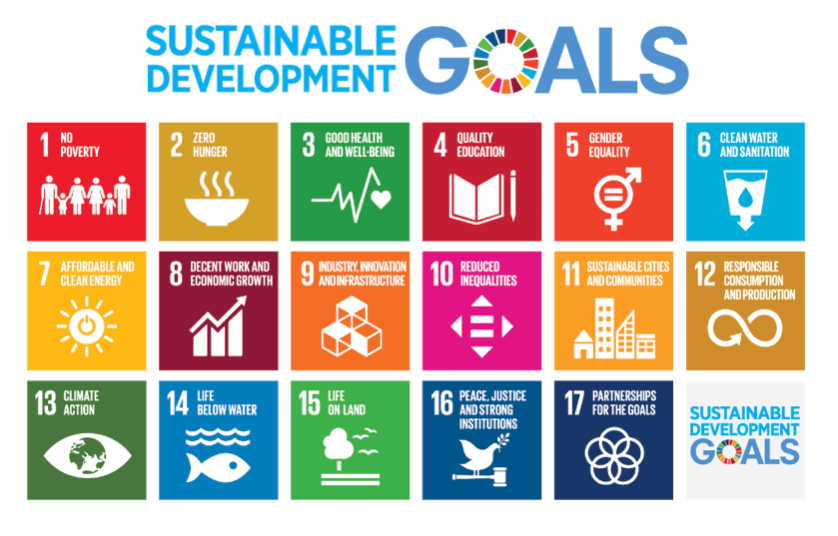
In 2015, the UN adopted the 2030 Agenda for Sustainable Development. The Agenda consists of 17 Sustainable Development Goals (SDGs) which are urgent calls for action across all countries. The SDGs recognize that ending poverty requires also tackling various other areas of social development, including health, education, economic growth, as well as challenges around climate change and the environment.

At Al-Ayn Social Care Foundation, our work is guided by the principle of breaking the cycle of poverty for the particularly vulnerable groups we support, orphaned children and widowed mothers. Much of the work we do therefore relates to numerous SDGs, as highlighted below.

SDG1 – No poverty
  • Al-Ayn Social Care Foundation was founded to support orphaned youth and widowed mothers living in poverty. All our projects, campaigns and efforts are aimed at lifting these groups out of poverty and enabling them to become independent contributors to their societies in the long run.
SDG 2 – Zero hunger
  • We run Food Distribution Programmes in Iraq, Ghana and Afghanistan.
  • During the Coronavirus pandemic, we delivered food parcels to those in need in Iraq.
SDG 3 – Good health and well-being
  • Our ‘Luminous Stars’ centres offer medical support such as pediatric and dental care to orphaned youth.
  • Our ‘Hikyatai’ programme involves art-based therapeutic activities for orphaned youth as part of a holistic approach to health and well-being.
  • During the Coronavirus pandemic, we supported 75 hospitals across 13 provinces in Iraq, by providing Personal Protective kits, surgical masks and respirators.
SDG 4 – Quality education
  • Our ‘Hikayati’ programme seeks to provide programmes personalised to the educational needs of each orphaned child.
  • Our Education Department facilitates financial assistance to orphaned children including contributions to the costs of tuition and school uniforms. It also provides emotional and moral support to orphaned children when sitting exams, and meets with teachers to follow up on the progress of students.
  • Our ‘Luminous Stars’ centres are vocational training centres that promote lifelong learning opportunities for orphaned youth.
SDG 5 – Gender equality
  • Our support and programmes are available to both orphaned boys and orphaned girls.
  • We recognize that achieving equality in a society means treating certain groups facing disadvantages differently. As such, we support widowed mothers in order to help them have some of the same opportunities that other members of society have.
SDG 6 – Clean water and sanitation
  • In July 2024, we initiated our first ‘WASH’ project, which involved successfully pumping clean, safe water to a small village on the outskirts of Accra in Ghana. We hope to develop a more comprehensive plan for routine maintenance and preventative measures, and continue with the building of further wells in the region to ensure clean water for all.
SDG 8 – Decent work and economic growth
  • Our ‘Luminous Stars’ centres, sites for vocational training for local communities and youth has helped in the continued implementation of SDG 8 on decent work and economic growth, as well as SDG 10 on reduced inequalities. More youth have been trained in contemporary skills such as mobile phone repair, so they are better equipped to join the labour market and become active members of society.
SDG 10 – Reduced inequalities
  • All our work is aimed at reducing poverty and therefore bridging inequality gaps in society, whether it’s our vocational training centres, Luminous Stars, designed to equip orphaned youth with key skills for employment, or our sponsorship programmes. We also recognize different types of inequalities in society and have tailored our support accordingly. For example, we have a special type of sponsorship with a higher rate for children and youth with special needs.
SDG 16 – Peace, justice and strong institutions
  • We have detailed processes and procedures in place, with thorough checks and controls at different levels to ensure that there is no corruption, there is proper means assessment, and only eligible beneficiaries receive support.

Al-Ayn Social Care Foundation and the UN Convention on the Rights of the Child

The UN Convention on the Rights of the Child is a legally binding agreement that sets out the fundamental rights of every child, irrespective of their race, religion or abilities. The treaty places obligations on states, as opposed to NGOs like Al-Ayn. Nevertheless, are commitment to children’s rights means that much of the work we do aligns with the content set out in the Convention.

Article 24 – every child has the right to the best possible health.
  • Our ‘Luminous Stars’ centres offer medical support such as pediatric and dental care to orphaned youth.
  • Our ‘Hikyatai’ programme involves art-based therapeutic activities for orphaned youth as part of a holistic approach to health and well-being.
  • During the Coronavirus pandemic, we supported 75 hospitals across 13 provinces in Iraq, by providing Personal Protective kits, surgical masks and respirators.
Article 27 – every child has the right to a standard of living that is good enough to meet their physical and social needs and support their development.
  • Through our rigorous systems and processes, we are able to identify orphaned children and widowed mothers in the areas where we operate, who are not currently able to afford a standard of living that meets their needs. All of our programmes and initiatives, whether it’s sponsorship, vocational training, psychological rehabilitation, medical or educational help are all aimed at ensuring our beneficiaries can attain a standard of living that is good enough to meet their physical and social needs, and support their development.
Article 28 – every child has the right to an education.
  • Our ‘Hikayati’ programme seeks to provide programmes personalised to the educational needs of each orphaned child.
  • Our Education Department facilitates financial assistance to orphaned children including contributions to the costs of tuition and school uniforms. They also provide emotional and moral support to orphaned children when sitting exams, and meet with teachers to follow up on the progress of students.
  • Our ‘Luminous Stars’ centres are vocational training centres that promote lifelong learning opportunities for orphaned youth.
Article 29 – Education must develop every child’s personality, talents and abilities to the full. It must encourage the child’s respect for human rights, as well as respect for their parents, their own and other cultures, and the environment.
  • Our ‘Hikayati’ project consists of providing a combination of education, play, leisure activities, mentoring, therapy and spiritual guidance to orphaned youth. Workshops teach relevant skills through a holistic learning approach and allows the children to practice these learned skills with interactive and hands-on activities. The workshop topics include teamwork and collaboration, confidence and resilience, leadership skills, art based therapeutic activities, coping skills and emotional intelligence, communication and presentation skills, career aspirations and goal setting, school retention, problem solving skills and etiquette skills.
Article 31 – Every child has the right to relax, play and take part in a wide range of cultural and artistic activities.
  • Our ‘Hikayati’ project consists of providing a combination of education, play, leisure activities, mentoring, therapy and spiritual guidance to orphaned youth. Workshops teach relevant skills through a holistic learning approach and allows the children to practice these learned skills with interactive and hands-on activities. The workshop topics include teamwork and collaboration, confidence and resilience, leadership skills, art based therapeutic activities, coping skills and emotional intelligence, communication and presentation skills, career aspirations and goal setting, school retention, problem solving skills and etiquette skills.
Article 36 – Governments must protect children from all other forms of exploitation, for example the exploitation of children for political activities, by the media or for medical research.
  • Through supporting orphaned children and widowed mothers, our aim is to prevent these vulnerable groups from falling into positions where they are susceptible to exploitation. Our philosophy is based on respecting their dignity and equipping them with skills and tools to become self-reliant in the long run.
Article 39 – Children who have experienced neglect, abuse, exploitation, torture or who are victims of war must receive special support to help them recover their health, dignity, self-respect and social life.
  • Many of the orphaned children and widowed mothers we support have faced various traumas in their lives, including living in conflict zones. As such, the initiatives we have designed, such as ‘Hikayati’ and ‘Luminous Stars’ include rehabilitation and psychological support to help these groups heal from whatever they have experienced in their pasts.